

U.S.-Japan Legislative Exchanges: JUSFC and its Grantee Partners
To mark the Japan-U.S. Friendship Commission’s (JUSFC) 50-year commitment to strengthening the U.S.-Japan Alliance, JUSFC is featuring the grantee-partners that organize and execute U.S.-Japan legislative exchanges. Promoting legislative exchanges is the third pillar of JUSFC’s strategic framework, reflecting the agency’s recognition that legislative understanding and cooperation between the United States and Japan are essential to supporting and sustaining the U.S.-Japan Alliance and the United States ‘role in the Indo-Pacific. Legislative exchanges create stable, sustained channels for diplomatic and political engagement between elected officials. They function as platforms for Members of Congress and congressional staff to build cross-sectoral partnerships and relationships with Japanese government officials, business leaders, academics, and civil society.
JUSFC is pleased to feature the three leading organizations in U.S.-Japan legislative exchanges: the Japan Center for International Exchange (JCIE USA), the U.S. Association of Former Members of Congress (FMC), and the Maureen and Mike Mansfield Foundation.
 Japan Center for International Exchange (JCIE USA)
JCIE USA is an independent, nonpartisan 501(c)(3) nonprofit organization founded in 1975 in New York. JCIE USA’s mission is to deepen understanding of Japan within the U.S. policy community and to facilitate U.S.-Japan collaboration in areas of mutual interest. Engaging the U.S. Congress on Japan is among JCIE’s top priorities. Since 2010, JCIE USA and JUSFC have partnered to organize the U.S. Congressional Staff Exchange Program, which provides a bipartisan group of congressional staffers with opportunities to learn firsthand about Japan and the role of the U.S.-Japan Alliance.
 U.S. Association of Former Members of Congress (FMC)
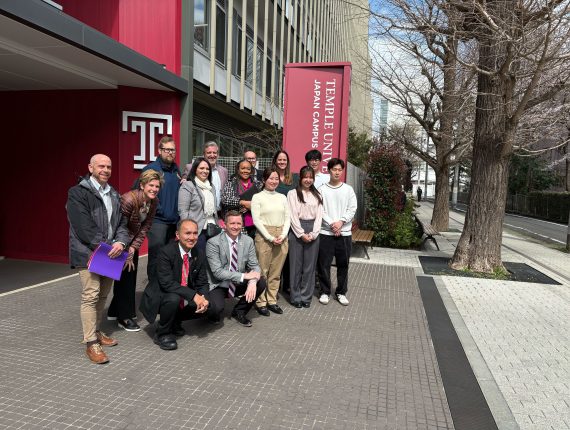
FMC is a bipartisan, nonprofit, voluntary alliance of former United States Senators and Representatives dedicated to promoting representative democracy at home and abroad. FMC engages over two hundred current Members of Congress and senior congressional staff annually through its Congressional Study Groups, which facilitate international legislative exchanges. The Congressional Study Group on Japan was founded in 1993 with support from JUSFC, and the agency has supported FMC’s Japan programming since then, including funding District Director Study Tours to Japan, which bring senior district office staff to Japan for firsthand exposure to the bilateral relationship.
 The Maureen and Mike Mansfield Foundation
The Maureen and Mike Mansfield Foundation is an independent 501(c)(3) organization that promotes understanding and cooperation among the nations and peoples of Asia and the United States. The values and vision of Senator Mike Mansfield and his wife Maureen continue through the Foundation’s exchanges, dialogues, and publications, which build networks among U.S. and Asian leaders, explore the policy issues that shape bilateral relations, and increase awareness about the nations and peoples of Asia. In 2016, the Mansfield Foundation partnered with JUSFC to merge the Foley Exchange with George Washington University’s Elliott School of International Affairs U.S.-Japan Legislative Exchange and Trilateral Legislative Exchange programs, creating a consolidated platform for legislative dialogue between the two countries.
-
How do legislative exchanges contribute to advancing your organization’s mission and strategic goals?
 JCIE: Legislative exchanges have always been a core aspect of our work to deepen mutual understanding between policymakers in the United States and Japan, thereby strengthening their support for the US-Japan relationship. Engaging the U.S. Congress including congressional staff is essential to helping stabilize the bilateral relationship and foster bipartisan support for the U.S. -Japan alliance, which plays an indispensable role to defend the national interests of the two countries, maintain peace and stability in the Indo-Pacific region, and address global challenges. JCIE also focuses on engaging staffers because they eventually serve as key advisors to members of Congress, and to nurture the next generation of policy experts who can act as stewards of the U.S. -Japan relationship.
 FMC: Legislative exchanges have been an intrinsic part of FMC’s mission since they serve as a platform for deeper and increased engagement of members of the U.S. Congress with Japan and other countries. Legislative exchanges are one of the main ways in which we pursue our work, whether that represents a study tour to Japan or fostering connections between Congress members and staffers and their counterparts abroad. During legislative exchanges, District Directors gain the chance to engage with their counterparts across the aisle and realize that they face similar issues every day, allowing for more active bipartisan engagement. While District Directors are often aware of the Japan connections to their congressional districts, legislative exchanges allow District Directors to gain a deeper understanding of the multiple ways in which the U.S. and Japan are so closely entwined and working together in a range of areas at the national and local levels.
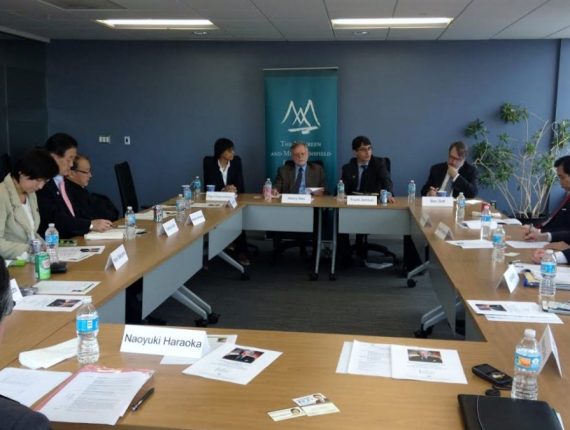 Mansfield Foundation: The Mansfield Foundation’s mission was set by the U.S. Congress to promote mutual understanding and cooperation between the United States and our key partners in Asia. Over time, we have come to realize that forging close ties to countries like Korea and Japan requires attention to government leaders, those in the legislative branch, business, and civil society.
When it comes to our foundation and its mission, legislative dialogues and exchanges are essential because they capture the full spectrum of concerns and interests of the American people and within the U.S. government that allow us to engage with our Japanese counterparts from multiple perspectives. Legislative exchanges are also critical to our mission, because as we work to strengthen the U.S. capacity to manage its relations with Asian partners, we also educate, brief and strengthen the capacity of Congress to really understand Asia and allow Congress to understand the value of our relations with Asia and reach good decisions about budgeting and managing U.S.-Asia relations.
-
In what ways has JUSFC’s institutional support strengthened your organization’s legislative exchanges?
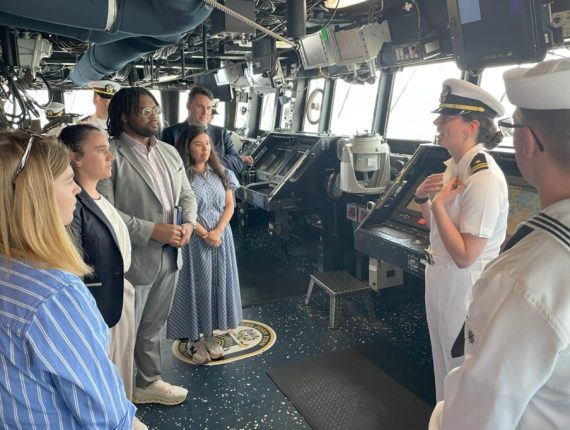
JCIE: JUSFC’s institutional support has been critical to our effort to deepen engagements with Japan among US Congressional staff, who serve as key advisors to members of Congress. By allowing us to take a bipartisan group of U.S. congressional staffers to Japan every year for a week-long study tour, JUSFC’s support has helped strengthen understanding of Japan among US legislators, many of whom have limited time and ability to travel themselves and nurture their support across the political spectrum. As an independent federal agency, JUSFC is also one of the few viable sources of funding to make these study tours available due to strict Congressional ethics rules and few grantmaking foundations focusing on Japan. Additionally, JUSFC continues to help us improve our U.S. Congressional Staff Exchange program, by identifying key staffers to involve, helping develop a meaningful study tour itinerary, and participating in our pre-trip briefings for participants. Our legislative exchanges have benefitted greatly from JUSFC’s leadership role in coordinating like-minded organizations that facilitate similar exchanges.
FMC: Since 2018, JUSFC funding has helped FMC reach groups like District Directors and Congress staffers, that have been historically under-engaged and underrepresented within the U.S.-Japan relationship. With the help of JUSFC, FMC has been able to bring District Directors into actual active exchange with an array of Japanese stakeholders by giving them a more active role and understanding of the exchange and relationships between the U.S. and Japan.
Mansfield Foundation: JUSFC has been the key source of funding from the U.S. side to sustain the Mansfield Foundation taking members of Congress to Japan and hosting Diet members to the U.S. JUSFC’s institutional role as funder is especially important to us because JUSFC, as an arm of the U.S. government is a trusted and cleared sponsor for congressional travel, so if we had to rely exclusively on private sector money to fund legislative exchange, it would greatly complicate the ethics clearance process, and might also make it harder for us to recruit members of Congress to participate. The fact that JUSFC is a federal agency, albeit with a great degree of independence, lends certain credibility to the whole enterprise, on top of our own foundation’s credibility. Since the consolidation of the Foley Legislative Exchange, JUSFC has supported the exchange administered by Mansfield, and we believe that it has paid real dividends in terms of deepening Japanese understanding of us and American understanding of them, it is a two-way benefit.
-
From your organization’s perspective, what role do legislative exchanges play in sustaining and deepening the U.S. and Japan Alliance?
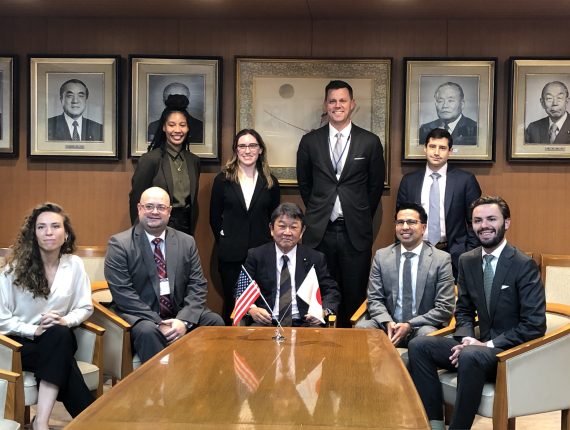 JCIE: U.S.-Japan Legislative Exchanges help nurture and guide the next generation of policy leaders and diplomats who can lead the US-Japan relationship. These exchanges that bring together people from across the political spectrum are key to fostering bipartisan support of the US-Japan alliance in the United States, addressing key issues affecting the bilateral relationship, as well as advancing US-Japan cooperation on regional, global issues and shared societal challenges.
FMC: Legislative exchanges are a way for existing and new 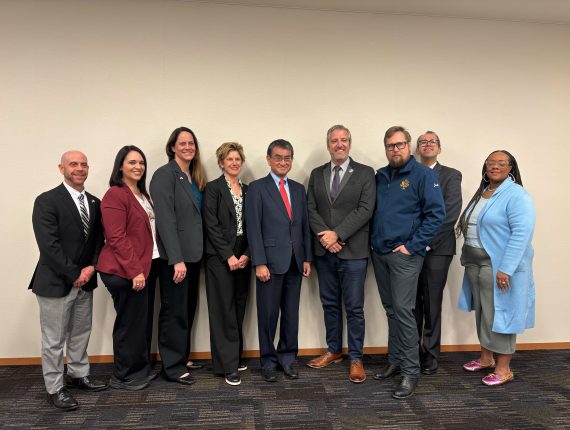 stakeholders to become more personally invested in the U.S.-Japan relationship and to gain a greater understanding of the U.S.-Japan Alliance. In the past, legislative exchange participants reported gaining a broader understanding of how multi-layered the U.S.-Japan relationship is, as they spoke to U.S. service members in Japan and learned how much they interacted with local communities and their counterparts in the Japanese Self-Defense Forces. Participating in these exchanges has allowed congressional staffers and District Directors realize how tangible the U.S.-Japan relationship is. As they meet their Japanese counterpart organizations, government officials, and decision-makers, District Directors gain an increased awareness of the Japanese officials, government agencies, and actors that are relevant to their congressional work and the broader U.S.-Japan Alliance.
Mansfield Foundation: Because Legislative Exchanges tend to be franker, and because the views of legislators in both countries are relevant in democracies like the U.S. and Japan, legislators on both countries can communicate more bluntly about tough issues, address underlying disagreements, ask the difficult questions, and address issues that would not be given full airing in other circumstances. Legislators can take on highly blunt straightforward dialogues that, in complementarity with the official diplomatic channels, create a robust exchange between both countries that is quite advantageous.
-
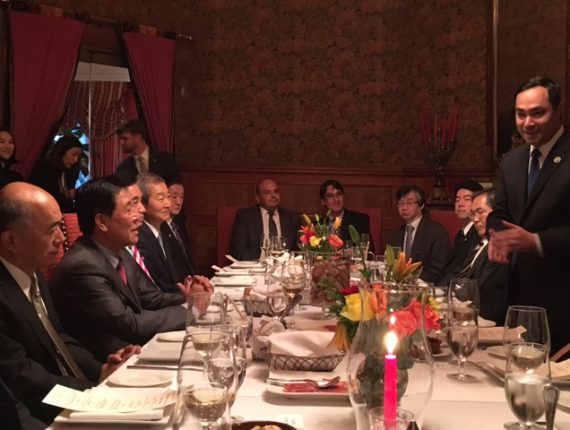 Is there any moment or experience you would like to highlight that had lasting impact on an exchange participant or contributed to strengthening the U.S.-Japan relationship?
JCIE: We have been impressed to see many alumni of our U.S. Congressional Staff Exchange Program’s study tour in Japan move into leadership positions in the public sector, often serving in roles relevant to both domestic policy and international relations. To raise just a couple of examples, Katharine MacGregor (2015 participant) returned to her role as Deputy Secretary, U.S. Department of the Interior for the 2nd Trump Administration in May 2025 and Dan Twining (1999 participant) serves as President of the International Republican Institute and engages with Japanese and U.S. policymakers on supporting democracy. As an example of the more immediate impact of the program, participants have often noted they gained valuable Japanese perspectives about regional and global affairs through opportunities to engage in candid conversations with numerous senior diplomats and Diet members. Participants also have lasting memories of their meetings with younger people in Japan, such as university students and cadets of the Self-Defense Forces, as unique and meaningful opportunities to understand next generation perspectives on Japan’s future and its relationship with the United States. These study tours have also helped staffers acquire better understanding of Japan’s domestic situation, which does not receive significant attention in the United States. To highlight these and other impact of the program featuring the 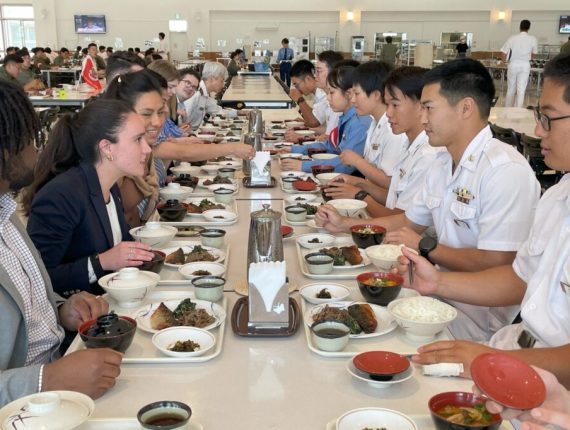 voices of the participants themselves, JCIE USA is launching an online alumni interview series, which will be available on our website (https://jcie.org/) later this month.
FMC: It has been demonstrated that when District Directors come back from Japan, they share their findings about Japan, the U.S.-Japan alliance, and how multitiered the relationship is between the U.S. and Japan with their member of Congress, their fellow congressional staffers, and their constituents. Returning District Directors have become motivated during their trip to Japan to dive deeper and learn more about the Japanese companies in their district. As a result, when they come back, District Directors often encourage and pave the way for their member of Congress to do more site visits to Japanese companies providing significant Foreign Direct Investment into their district. An example of these types of connections includes Darian David, District Director and Deputy Chief of Staff for Representative Carol Miller (R-WV), who, after coming back to Japan, started to leverage her experience in Japan to better support her member of Congress leverage West Virginia’s connections to Japan. [Learn more here]. Another example is that of Sue Walker, Deputy Chief of Staff and District Director for U.S. Representative Chrissy Houlahan (D-PA), who after learning about the 1000-paper-crane story during her Study Tour to Japan to Tokyo and Nagasaki, gained a better understanding of the goodwill gesture of 1000 folded paper cranes that Rep. Houlahan sent to Hiroshima. Walker now intends to follow Rep. Houlahan’s footsteps in involving her local community to continue supporting the people-to-people exchanges that populate the U.S.-Japan relationship.
Mansfield Foundation: A key moment came during election year in 2016, year in which we held a legislative exchange dialogue and in which both presidential candidates opposed ratifying the Trans-Pacific Partnership Agreement. Upon learning about the potential political shifts in the U.S. regarding the TPPA, Japanese Legislators participating in our dialogues that year, then sought other options for continued bilateral engagement through alternative U.S.-Japan frameworks, supply chains, and bilateral trade.
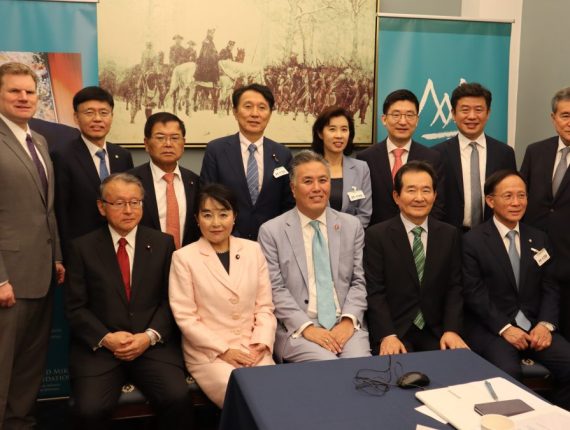 Another key outcome from our legislative exchange participants has been an increased awareness amongst Congressmembers about the need for U.S. leadership globally and amongst our allies. From multiple legislative exchanges and dialogues, program participants like Senator Hagerty (R-TN) and others have gained an increased understanding of historical issues affecting South Korean – Japan relations that in the past thwarted security cooperation. Upon realizing the need for rapprochement between South Korea and Japan from our legislative dialogues over the years, Sen. Hagerty and other former participants have stepped in to promote increased trilateral cooperation and a forward-looking agenda with common interests for the U.S., Japan, and South Korea.
Lastly, another aspect to highlight is that often when Members of Congress travel to Japan, members often get a chance to leverage the experience by bringing in a better understanding and direct experience of systems they wish to advocate for or want to implement in their home districts. Members also pursue and represent their home districts’ interests in Japan, often seeking to establish connections between Japan and their home districts.