

The U.S.-Japan Bridging Foundation (日米交流財団) —
For fifty years, JUSFC has worked to strengthen the U.S.–Japan relationship, advancing America’s security and prosperity by equipping future leaders with essential knowledge of Japan. Through its institutional grants, JUSFC has built critical knowledge infrastructure across U.S. organizations, fostering the next generation of leadership in education to serve U.S. interests. In this article, we explore the story behind the U.S.-Japan Bridging Foundation, which has played a transformative role in promoting educational exchange between the two nations.
“The Japan-U.S. Friendship Commission is a focal point for the U.S.-Japan relationship.” says Dr. Tom Mason, Executive Director of the Bridging Foundation.
Founded in 1998 at the recommendation of the U.S.-Japan Conference on Cultural and Educational Interchange (CULCON), the Bridging Foundation was created by JUSFC to address a significant imbalance of student mobility between Japan and the United States during this period: while approximately 46,000 Japanese students were studying in the United States, only 2,000 American students were studying in Japan.
As Dr. Mason explains:
“CULCON panelists in both the United States and Japan identified student exchange as an area that needed greater attention to strengthen the U.S.-Japan relationship.”
The Foundation’s core mission is threefold: Advocating for increased participation in study abroad programs to Japan, funding scholarships for undergraduate students studying in Japan, and mentoring and supporting students throughout their experience abroad and upon return.
Breaking Financial Barriers
One of the biggest challenges historically for U.S. students considering study abroad was the financial burden—tuition for a full semester, plus room and board, airfare, and other expenses. Added to this was the strong yen in the 1990s, which made studying in Japan even more costly. These economic barriers discouraged many students, posing a risk to cultivating future experts who could sustain one of the world’s most influential bilateral relationships.
“Even small scholarships—$3,000 to $6,000—can make a huge difference,” Dr. Mason says. “They enable students to study abroad who otherwise couldn’t afford it.”
These scholarships, known as Bridging Scholarships, have opened doors for thousands of students, making studying abroad a reality rather than a dream.
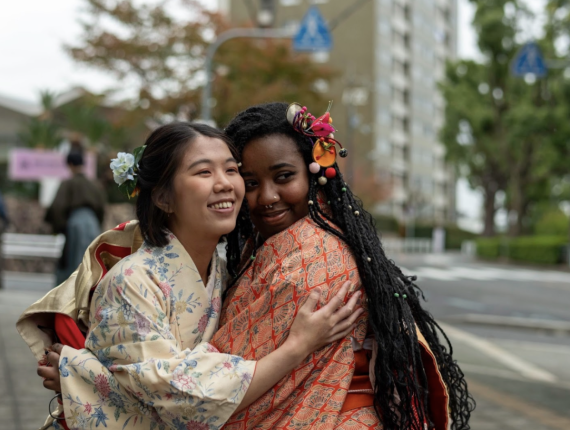
Supporting study abroad in Japan strengthens U.S.-Japan ties and U.S. expertise on Japan, building vital knowledge infrastructure and Japanese language skills essential for U.S. competitiveness.
Beyond Scholarships: Building Networks and Confidence
The Bridging Foundation’s efforts go beyond scholarships. They actively expand their network to reach students nationwide, especially at smaller institutions without study abroad offices. “The one thing I’m very proud of is that we reach out to all kinds of universities to solicit applications, including smaller schools and non-flagship state universities that don’t have Japanese language or culture programs,” Dr. Mason notes. “The idea is we need to reach students from all over America.”
The Foundation also helps students navigate challenges students may face abroad by offering pre-departure orientations with practical tips on transportation, finances, and daily life in Japan. “Managing daily life is the foundation. Once that’s handled, students can focus on their studies and building the networks they need for their careers,” Dr. Mason explains.
Building a social network is also essential for students. The Foundation want students to engage in the local community as much as possible—to interact with people, use the Japanese language, and share their own culture. “When students join a club or circle at their host university, or some other group activity in the larger community, after about seven visits they feel like they are really part of it,” Dr. Mason notes. “And it’s that feeling that they’re part of the community—really part of it—that makes their year in Japan far more rewarding.”
After the program, the Foundation connects students with donors and alumni, providing professional opportunities and a lasting network.
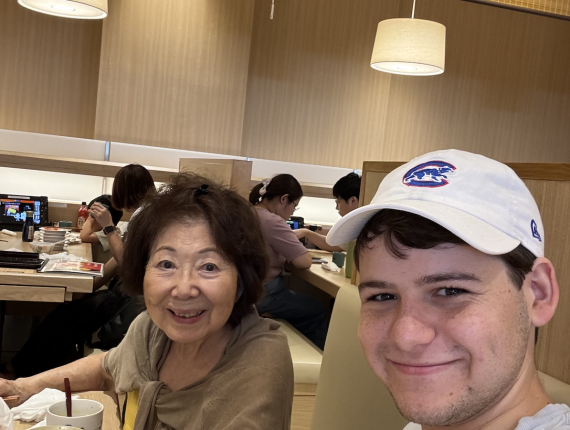
U.S.-Japan Bridging Foundation support goes beyond scholarships, providing orientations with practical tips for building strong connections with the Japanese community.
Impact on Students
The changes in participants are clear. “What I see most often is an increase in confidence and self-belief—students pushing their ambitions further than they thought possible,” Dr. Mason says. “They discover they can navigate a different culture, build relationships across language barriers, and accomplish things that once seemed impossible. That’s how we prepare global professionals.”
How JUSFC’s Support Impacts the Bridging Foundation
JUSFC has supported the Bridging Foundation’s activities through institutional grants. These funds are primarily used for scholarships, enabling four to eight students each year to pursue their aspirations in Japan as JUSFC Bridging Scholars.
In addition to scholarships, JUSFC provides programming support, ensuring mentorship and other initiatives are possible.
“JUSFC considers this program critical to the U.S.-Japan relationship,” Dr. Mason notes. “That endorsement carries real weight when we approach other organizations, foundations, corporations, and individuals for support. They see that JUSFC views Bridging as essential to the bilateral relationship, and that matters.”
Beyond financial assistance, JUSFC’s network and community have also helped the Bridging Foundation expand its partnerships and collaborations:
“The Japan-U.S. Friendship Commission is a focal point for the U.S.-Japan relationship. The network and community it nurtures are critical for the Bridging Foundation.”
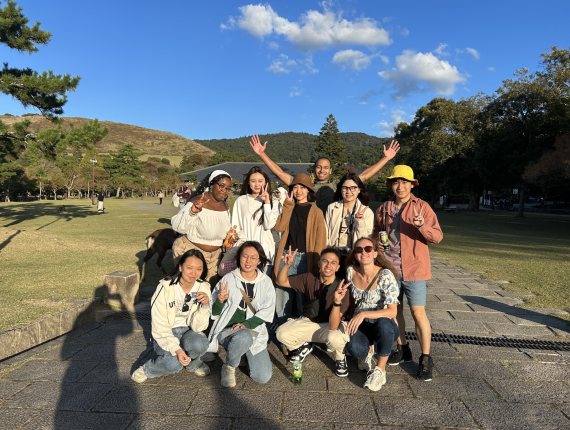
JUSFC Bridging Scholars studied in Japan, building human capital through lasting friendships and experiences that prepare future generations to advance U.S. interests in the Indo‑Pacific.
Future Vision
Today, more and more Americans are showing interest in Japan.
“I’m constantly amazed by the level of passion students have for Japan. It’s unlike anything I’ve seen for other regions when it comes to studying abroad. It really attracts a special kind of student,” Dr. Mason says.
Dr. Mason aspires to increase the number of scholarships offered by the Bridging Foundation, but his vision goes beyond numbers:
“A key area we want to focus on is building community—connecting students, program supporters, and other stakeholders to create a cohesive network of people committed to strengthening the U.S.-Japan relationship by nurturing the next generation.”