

When Sue Mark and Bruce Douglas of marksearch and their 11-year-old son Roli left their Oakland home for Tokyo in mid-March, they wondered if they were making the right choice. California’s governor had just issued a shelter-in-place order, and concerns about the coronavirus were ramping up. For months they had been planning to live in Tokyo, stay through the Summer Olympics and Paralympics, and complete their Japan-U.S. Friendship Commission and National Endowment for the Arts (Arts Endowment)-funded project “Journey Itself Home,” a U.S.-Japan collaborative poetic exploration honoring survivors of the 2011 Fukushima disaster.
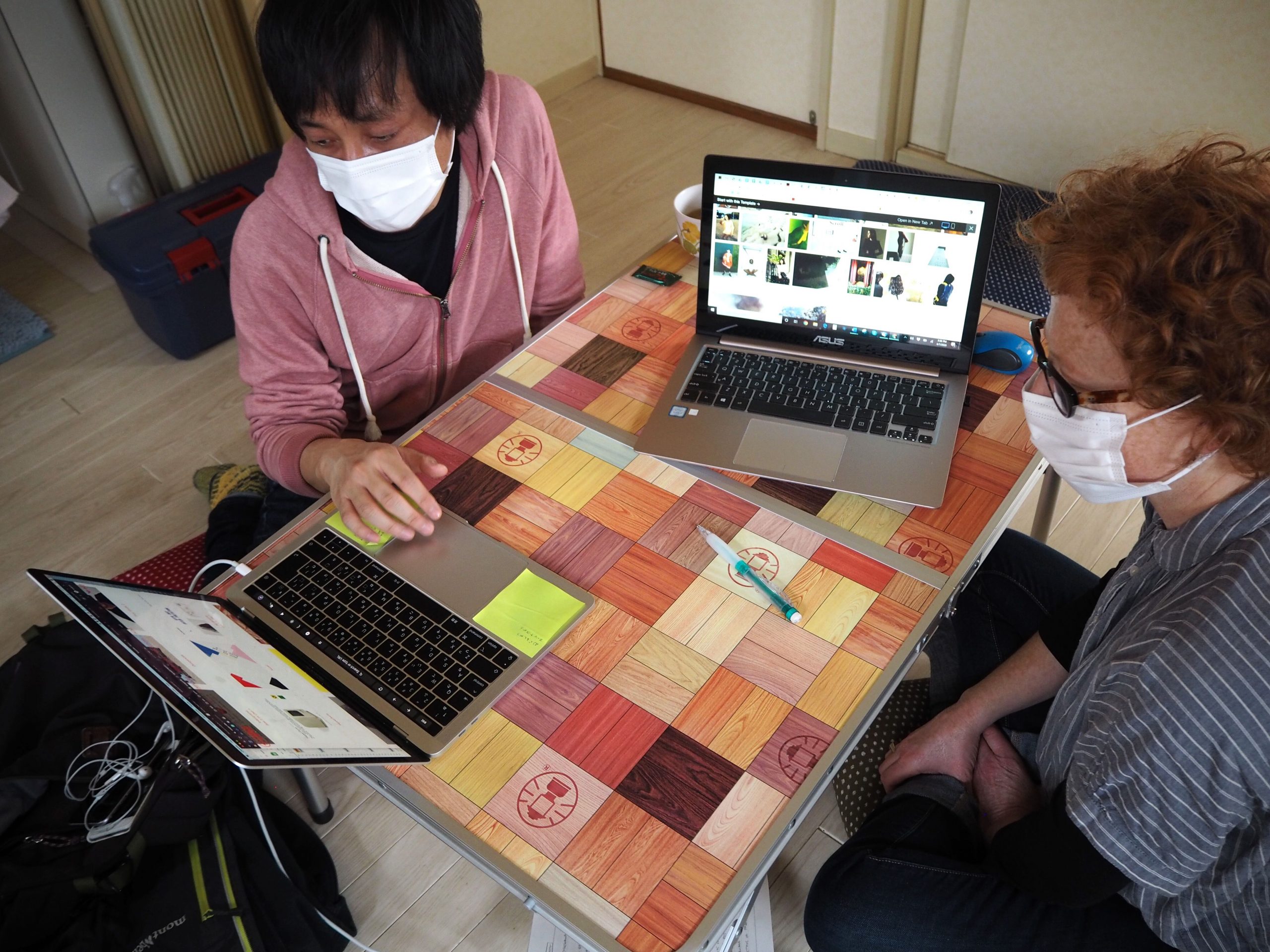
Hiro and Sue at work before social distancing went into place
With the postponement of the Summer Olympics and Paralympics until 2021, Sue and Bruce’s project will now take place during the ten-year anniversary of the March 11 Fukushima disaster – known in Japan as 3-11 – which allows them to raise greater awareness of the area’s resilience. According to their artistic partner Hiroyuki “Hiro” Abe, the disaster has faded in the memories of many Japanese people, while the devastating human and environmental challenges continue. This timing shift presents a vital opportunity to bring 3-11 to the forefront. Today, recovery projects in Fukushima Prefecture are still only half-done. Many parallels, including collective anxiety and questions of safety, can be drawn between the Fukushima disaster and the pandemic the world is experiencing now, making “Journey Itself Home” all the more relevant.
Sue gave thought to one of the major underlying themes of their project, the resilience of the human spirit, and was reassured that they should travel to Japan to move forward in the face of the unknown.
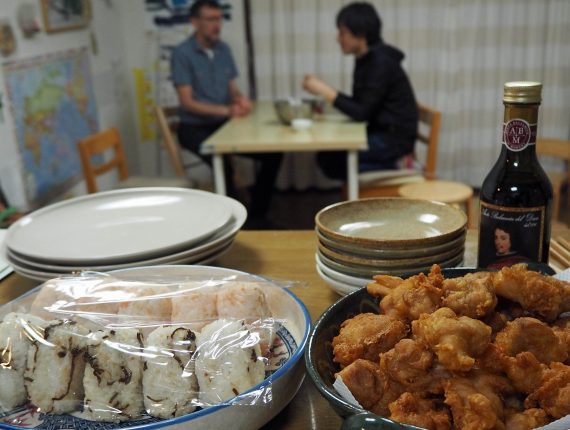
Bruce with Hiro at his birthday dinner right before in-person meetings ended
“We walked to the train, while a friend drove all our luggage to the station to maintain social distancing,” she recalls. “We couldn’t even hug goodbye.”
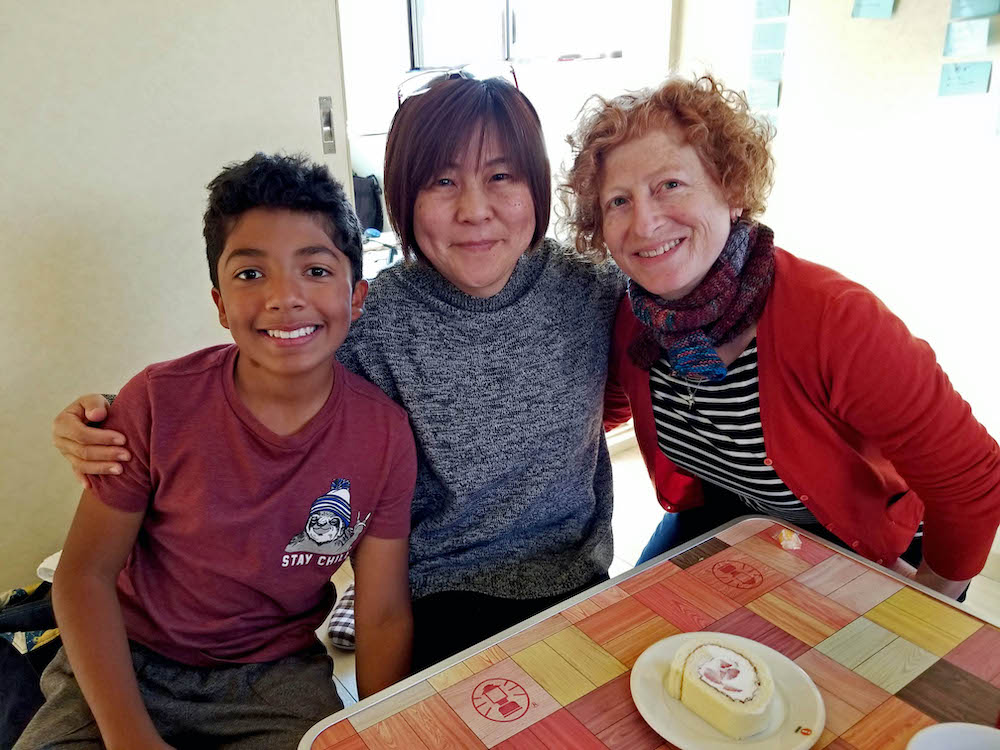
Sue and her son Roli with friend Yasuko
Once in Tokyo, Sue and Bruce settled into their new apartment, but were surprised at how Japan seemed largely unaffected by the pandemic. They enjoyed visiting with Yasuko Takada, an old friend, as well as their project partners Hiro Abe and Natsuka Endo, Japanese multimedia artists who Yasuko introduced them to last year. The families recently celebrated Hiro’s birthday by making homemade gyoza together.

Books on Haiku from the International House of Japan’s library collection
In recent weeks, social distancing in Tokyo and throughout Japan has become increasingly strict. Initially the project team thought they could travel to Fukushima; but now it is no longer possible for the artists to meet in person, or with other project partners. Before museums and businesses shut down, Sue and Bruce were able to visit the International House of Japan’s library, which houses Japan’s largest collection of English language books about Japanese culture and history. They found many insightful books about the Fukushima aftermath, haiku histories and traditional Japanese architecture, which they plan to research for inspiration.
The ongoing pandemic has caused many changes to their initial project concept. Rather than travel from Tokyo to Fukushima in a specially designed truck as previously planned, they are considering ways to create a participatory process on a person-to-person model.
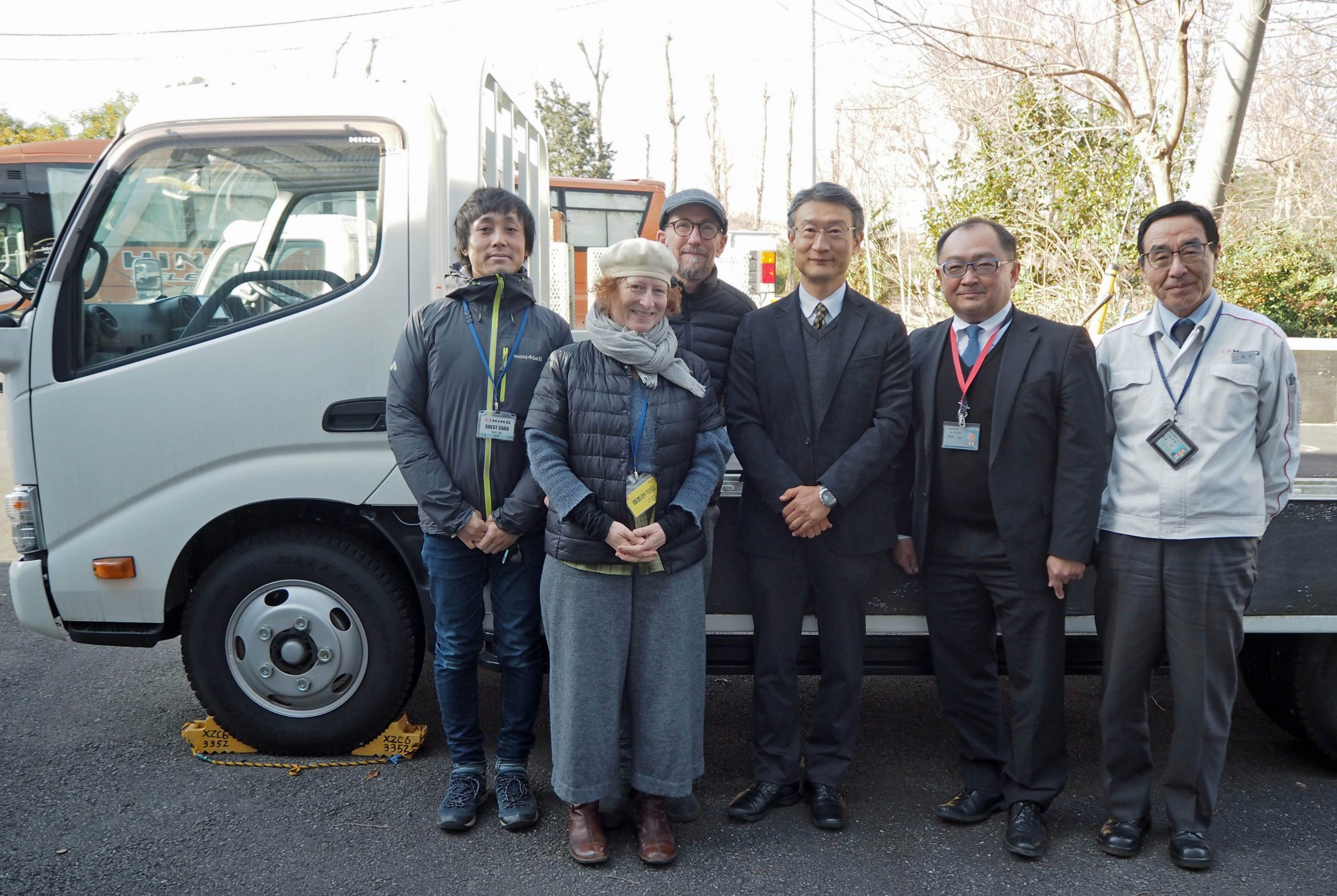
Before social distancing began, the U.S.-Japan artistic team met with Executives from Hino to plan their truck design
They are spending their time expanding their research of acknowledging grief to access hope; community building to regain social trust; and various recovery strategies.
It is no longer possible to hold workshops with schools and community groups. Therefore, Sue, Bruce, Hiro and Natsuka have revised their ideas for the truck’s build-out as well. Hino Truck Corporation continues to be a strong project partner; they are generously donating a 2-ton truck along with structural construction. “Instead of a mobile meeting space, we will now incorporate elements such as kinetic sculptures and audio to engage viewers, while still allowing for social distancing,” Bruce explains. “We plan to drive it slowly through the streets of Tokyo next summer.”
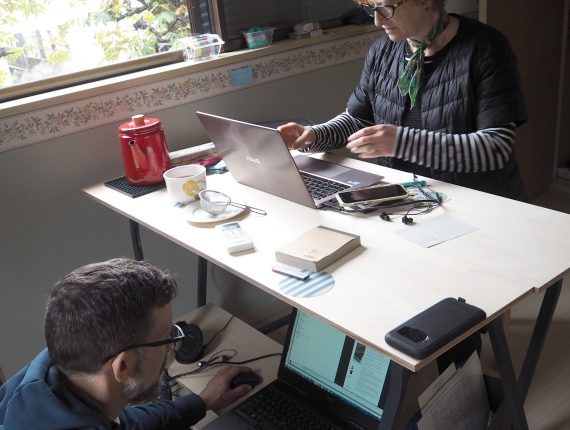
Sue and Bruce at work at their innovative double desk in their 400 sq ft Tokyo apartment
“While having the Olympics cancelled, being under quarantine in a 400 square-foot apartment far from our loved ones, and postponing our project for a year could be setbacks, we actually feel the meaning of our work is really amplified now,” Sue adds. “This extra time allows us to research more deeply into Fukushima survivor narratives and how we can tie our work in with the region’s 10-year disaster recognition. This new world-context that we’re all in asks for us to find new ways to engage with others through art and definitely learn from the resilience we see all around.”

Community building to repair social trust is a key theme of the project which will now coincide with the 10th anniversary of the Fukushima disasters
“The Japanese concept of ‘shou ga nai’ (しょうがない)—which translates loosely to being at peace with that which is out of your control—is a theme that is very relevant, and one that we are trying to embrace,” Sue notes. “We continue to be grateful to JUSFC, the Arts Endowment, and all of our supportive partners here in Tokyo for this unique opportunity.”
Follow marksearch on Instagram at Journey Itself Home and Commons Archive. To learn more about JUSFC’s Creative Artists Program and Grants, visit our website here. Please also follow us on Instagram, Facebook and Twitter for updates on our NichiBei Creative Artists and other programs.